
Details You May Have Missed from Bad Bunny’s Super Bowl Performance
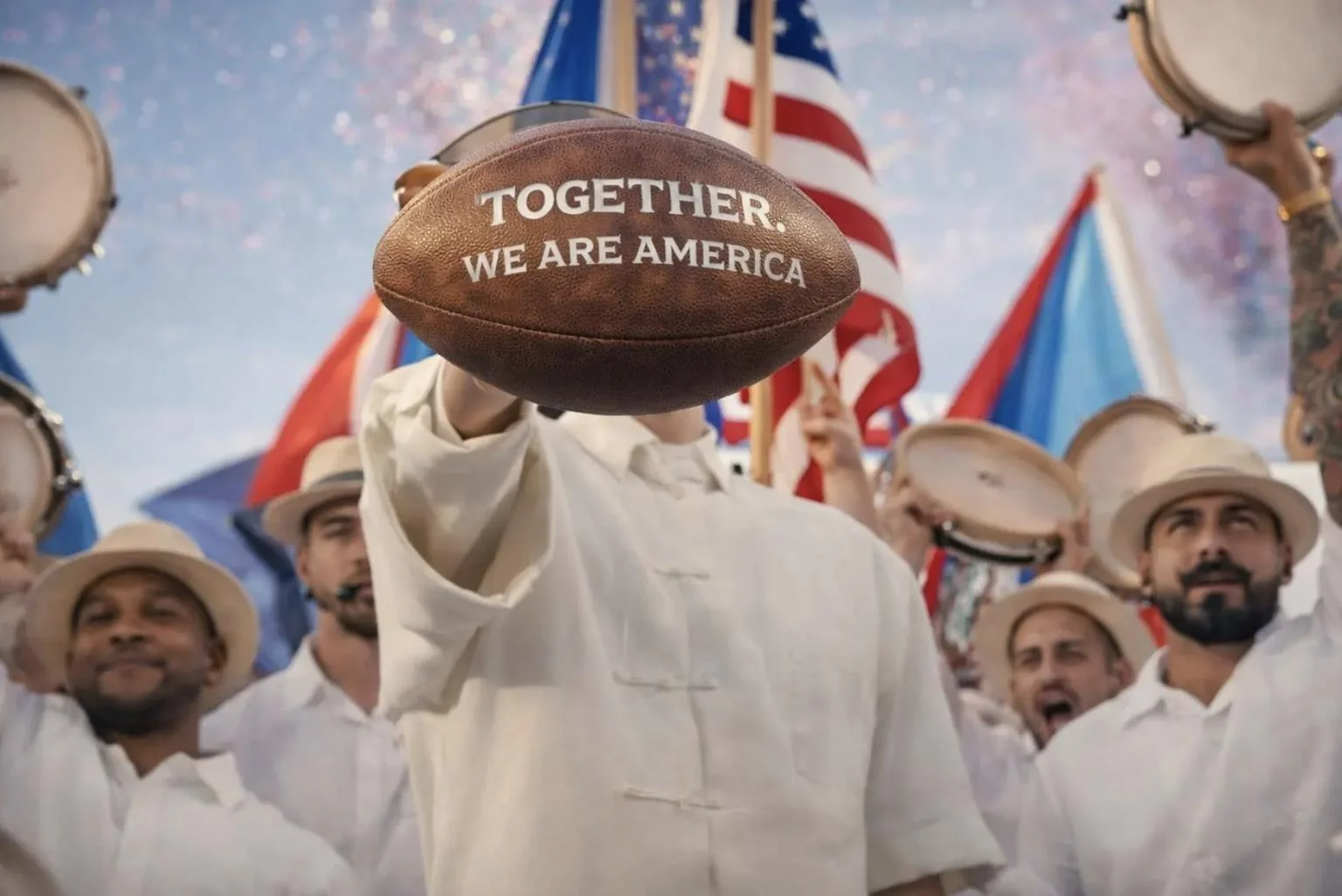
Puerto Rican superstar Bad Bunny, born Benito Antonio Martinez Ocasio, delivered the most-viewed Super Bowl halftime performance, drawing an estimated 135.4 million viewers and surpassing Kendrick Lamar’s previous record of 133.5 million. As the first halftime show performed primarily in Spanish, what did this performance mean for the Latin American diaspora? The short answer: everything. In only 13-minutes, Benito executed an unapologetic celebration of Puerto Rican culture. His record-breaking performance weaved symbolism, history, and community into one of the largest televised stages in the United States. Here are some powerful symbols you might have missed during the show.
La Casita
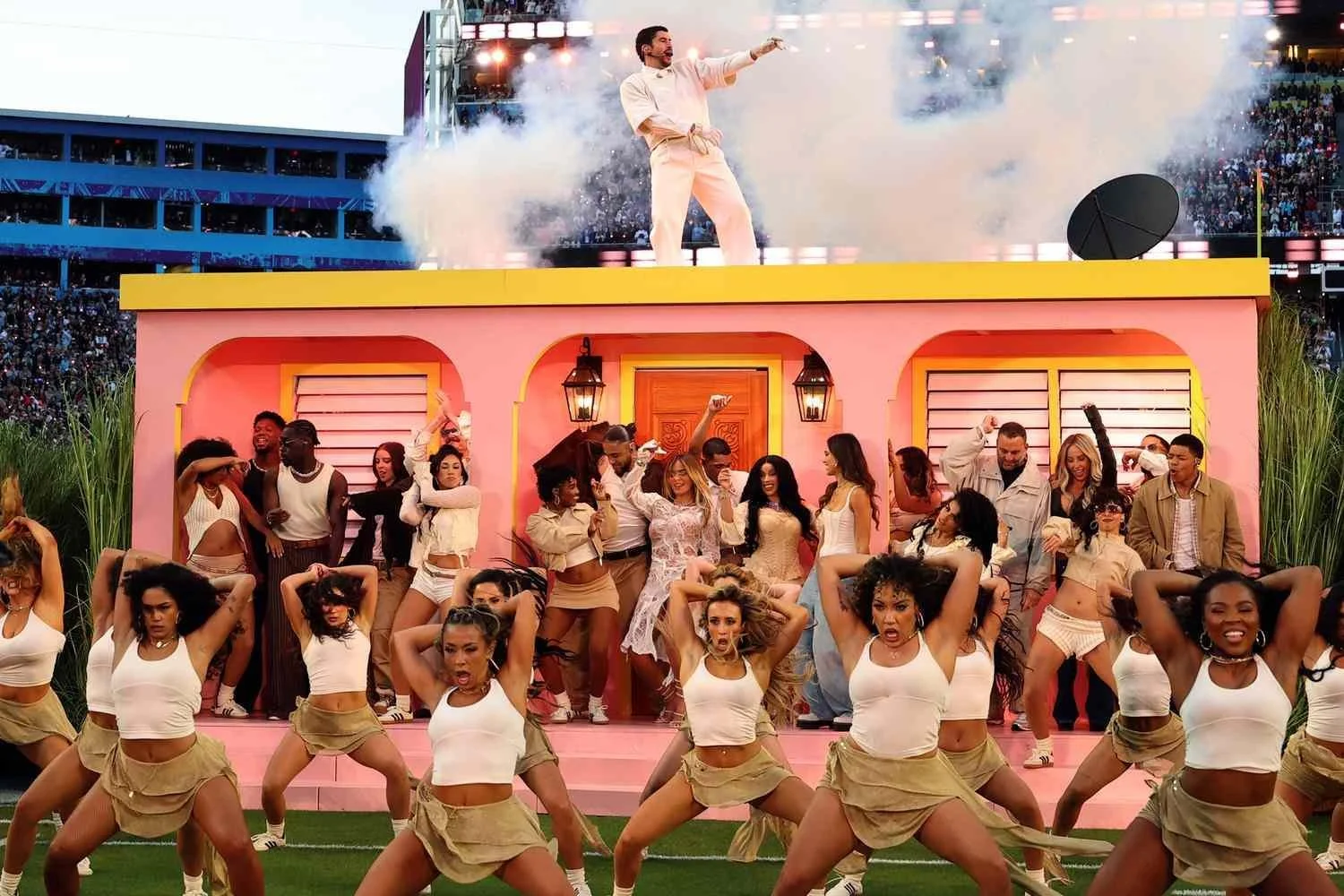
The stage itself was a vibrant recreation of La Casita, modeled after a real home in Humacao that previously inspired the set design for Benito’s Puerto Rico residency. Not only is this a nod to his previous shows, but Puerto Rico’s iconic colorful architecture itself.
The San Juan Wedding
Mid-performance, viewers witnessed a live wedding ceremony as Lady Gaga sang a Latin-inspired rendition of “Die with a Smile”. According to Architectural Digest, the setting was intentionally modeled after La Rogativa, a historic plaza in San Juan known for hosting wedding ceremonies (Garcia). The moment reinforced the theme of love and communal celebration.
The Big Apple in San Francisco
While many of the symbolic references of the show tied directly to the island, a major part of Benito’s performance paid homage to the Puerto Rican community in New York. While singing “Nuevayol”, the opening track of Debí Tirar más Fotos, the field transformed into a bodega-lined city street. A piragua cart, an iconic Puerto Rican shaved-ice treat, and a replica of a Brooklyn social club added layers of authenticity. These details serve as an acknowledgment of migration, resilience, and cultural preservation far from home.
Benito’s Childhood
One of the most emotional aspects of the performance was when Bad Bunny handed off his recently earned Album of the Year Grammy award to his younger self, reiterating the themes of his show; community, hope, and celebration.
The Puerto Rican Flag of Independence
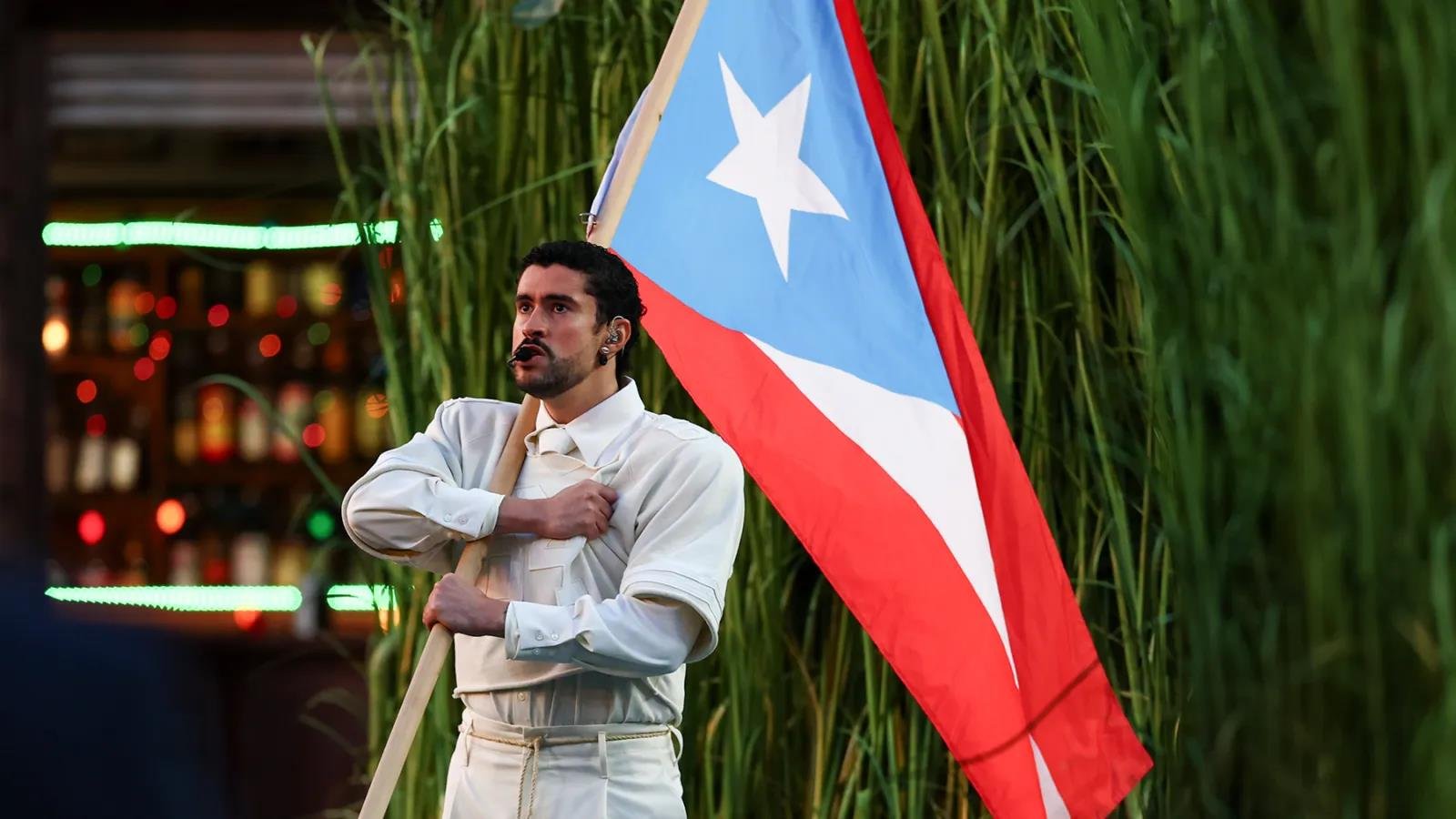
A miniscule detail that made a major statement in his performance was the flag that Bad Bunny chose to display. This flag uses the original shade of light blue on the triangle, before it was changed in 1952 to match the flag of the United States. This flag is often used as a symbol of Puerto Rican independence.
Even more powerful, he waves this flag while singing "El Apagon” or “The Blackout”: a song referring to Puerto Rico’s resilience despite the devastating effects of Hurricane Maria and the year-long power outages.
The performance concluded with flags from nations across North and South America carried across the field a sweeping visual of unity.
By bringing Puerto Rican culture to one of the most-watched televised events in U.S. history, Bad Bunny did more than perform. He centered language, heritage, and identity on a stage that has rarely made room for it.